Traditional Chinese Dyeing Techniques
Introduction
Traditional Chinese dyeing techniques are an ancient art form that combines craftsmanship, cultural heritage, and natural resources to create vibrant and intricate patterns on textiles. These techniques, which have been practiced for over a thousand years, utilize natural dyes extracted from plants, herbs, and other organic materials. The process is deeply rooted in Chinese history and culture, reflecting the country's appreciation for eco-friendly materials and understated aesthetics. Today, these methods are experiencing a revival as people increasingly value sustainable practices and traditional crafts.
History of Traditional Chinese Dyeing Techniques
The history of Chinese dyeing techniques dates back more than a millennium, with evidence of their use found in ancient texts and artifacts. Early dyeing methods were developed alongside advancements in textile production, as artisans sought ways to enhance the beauty and durability of fabrics. Natural dyes, derived from plants and minerals, were the primary source of color, and the techniques were passed down through generations.
In regions like Dingxi city in Northwest China's Gansu province, dyeing methods evolved into a local craft with unique characteristics. The abundance of herbal medicines in Dingxi contributed to the development of dyeing practices that utilized these natural resources. Families and communities preserved the knowledge of dye extraction and application, often integrating it with other traditional crafts such as embroidery and paper-cutting.
Over time, dyeing techniques became an integral part of Chinese culture, influencing fashion, art, and rituals. The methods were adapted to suit various regions and ethnic groups, resulting in a rich diversity of styles and patterns. Despite the challenges posed by industrialization and chemical dyes, traditional dyeing techniques have endured as a symbol of China's artistic and cultural heritage.
Materials and Tools
Natural Dyes
Natural dyes are the cornerstone of traditional Chinese dyeing techniques. These dyes are extracted from plants, herbs, roots, flowers, and minerals, offering a wide range of colors and shades. Common sources include indigo for blue, madder root for red, and turmeric for yellow. Herbal medicines are used to create unique hues, such as the orange shade derived from boiled plant roots.
The process of extracting natural dyes requires precision and patience. Specific pigments must be boiled at controlled temperatures to achieve the desired color. The quality of the dye depends on factors such as the freshness of the raw materials, the boiling time, and the alkalinity of the solution. Artisans often experiment with combinations of ingredients to produce distinctive and harmonious colors.
Dyeing Tools
Traditional Chinese dyeing techniques rely on a variety of tools to apply and manipulate the dyes. These tools include brushes, stamps, and stencils for creating patterns, as well as vats and containers for dyeing fabrics. Tie-dyeing, batik, and dip-dyeing methods require specialized equipment to achieve their characteristic effects.
In hand-dyeing processes, artisans use simple yet effective tools to control the application of dye. For example, in tie-dyeing, fabric is folded, twisted, or tied with strings to create intricate patterns. Batik involves the use of wax to resist dye and form designs. Dip-dyeing requires careful immersion of fabric into dye baths to achieve gradient effects. Each tool and technique contributes to the uniqueness of the finished product.
Techniques and Processes
Tie-Dyeing
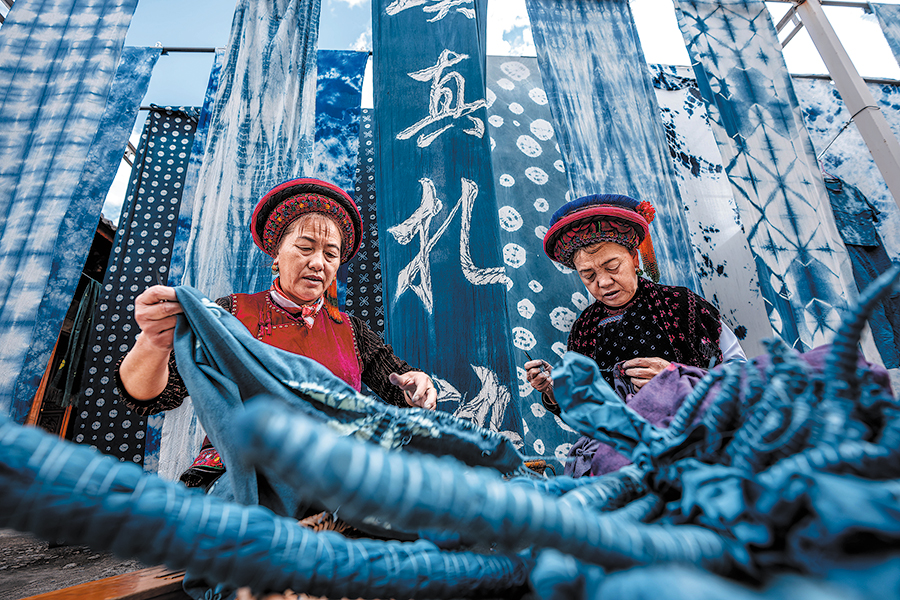
Tie-dyeing is one of the most popular traditional Chinese dyeing techniques. It involves folding, twisting, or tying fabric before applying dye, resulting in intricate and symmetrical patterns. Artisans use strings or rubber bands to secure the fabric, creating areas that resist the dye and form designs. The process is highly versatile, allowing for endless variations in color and pattern.
Batik
Batik is a resist-dyeing technique that uses wax to create designs on fabric. The wax is applied to specific areas, preventing the dye from penetrating those sections. After dyeing, the wax is removed, revealing the patterns. Batik is especially popular in southern China, where it is used to decorate ethnic costumes and textiles. The technique requires skill and precision, as artisans must carefully control the application of wax and dye.
Dip-Dyeing
Dip-dyeing involves immersing fabric into dye baths to achieve gradient or solid colors. The technique is straightforward yet effective, allowing artisans to experiment with color intensity and blending. Dip-dyeing is often used in combination with other methods to enhance the visual appeal of textiles.
Hand-Painting
Hand-painting is a meticulous dyeing technique that involves applying dye directly to fabric using brushes or other tools. This method allows for detailed and expressive designs, making it ideal for artistic and decorative purposes. Hand-painting requires a steady hand and a deep understanding of color theory to achieve harmonious compositions.
Cultural Significance
Traditional Chinese dyeing techniques hold profound cultural significance, reflecting the values and aesthetics of Chinese society. The use of natural dyes symbolizes harmony with nature and respect for the environment. The intricate patterns and vibrant colors represent creativity and craftsmanship, while the integration of dyeing with other traditional arts highlights the interconnectedness of Chinese culture.
Dyeing techniques are also associated with rituals and celebrations. In ethnic communities, dyed textiles are used in festivals, weddings, and other important events. The patterns and colors often carry symbolic meanings, such as prosperity, happiness, and longevity. By preserving these techniques, artisans contribute to the continuity of cultural traditions and identity.
Regional Variations
China's diverse geography and ethnic composition have given rise to regional variations in dyeing techniques. Each area has its unique methods, materials, and styles, influenced by local resources and cultural practices. For example, batik is prevalent in southern China, while herbal dyeing is a specialty of Dingxi in Gansu province.
Ethnic groups such as the Miao, Dong, and Bouyei have developed distinctive dyeing traditions that reflect their heritage. The Miao people are known for their elaborate batik designs, often used in traditional costumes. The Dong community incorporates natural dyes into their textiles, creating vibrant and durable fabrics. These regional variations enrich the tapestry of Chinese dyeing techniques, showcasing the country's cultural diversity.
Modern Applications and Revival
In recent years, traditional Chinese dyeing techniques have experienced a revival, driven by growing interest in sustainable practices and cultural heritage. Artisans like Qi Hui have played a pivotal role in promoting these methods, combining them with modern textiles and designs. Qi's studio in Dingxi produces wallets, scarves, and handbags dyed with herbs, attracting consumers who appreciate eco-friendly and fashionable products.
The revival has also been supported by exhibitions, workshops, and collaborations with designers. Events showcasing dyed works from Chinese artists have helped raise awareness and appreciation for the craft. Additionally, the integration of dyeing techniques into contemporary fashion and art has broadened their appeal, making them relevant to modern audiences.








